
What Is an Infrared Lens Module?
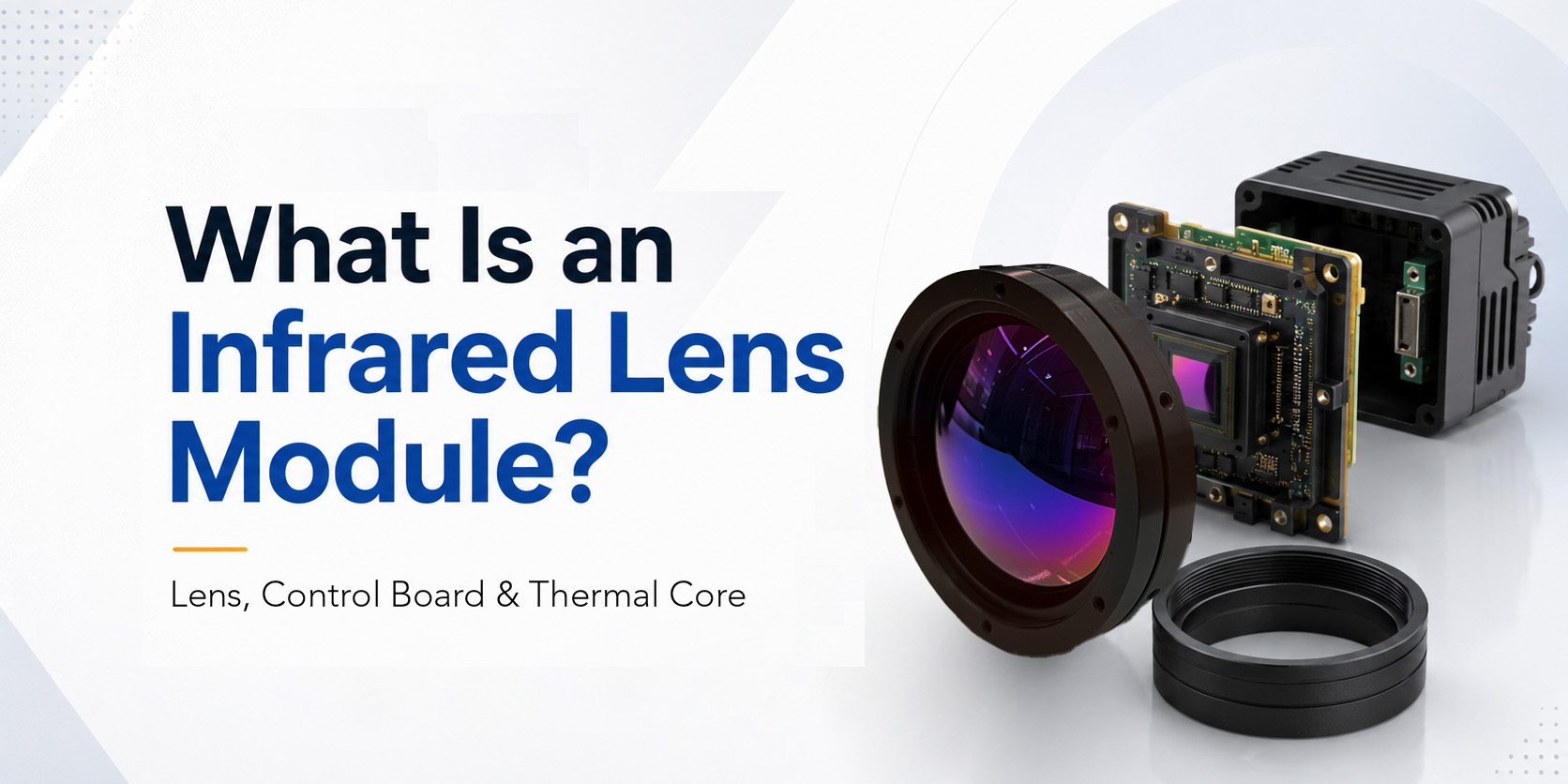
An infrared lens module is a key part of a thermal imaging system. Depending on the system design, it may include an infrared lens, lens housing, motorized focus or zoom mechanism, lens control board, and thermal core.
When manufacturers integrate the infrared lens, lens control board, and thermal core, these components form a complete infrared imaging module. In addition, engineers can combine the module with an outer housing, software, power supply, display, and communication interface to build a complete thermal camera.
How Does an Infrared Lens Module Work?
An infrared lens module collects infrared energy from a target or scene and focuses it onto a thermal detector. The detector then converts the infrared energy into an image signal so that the system can produce a thermal image.
In simple terms, the infrared lens works like the “eye” of a thermal camera.
For a basic system, the module may only contain an infrared lens and lens housing. However, a more advanced system may also include motorized focus, continuous zoom, a lens control board, and a thermal core.
Therefore, the exact structure of an infrared lens module depends on the application, detector, operating distance, and required imaging functions.
What Are the Main Parts of an Infrared Lens Module?
An infrared lens module can include several optical, mechanical, and electronic components.
The main parts may include:
- Infrared lens
- Lens housing or casing
- Focus mechanism
- Zoom mechanism for zoom lenses
- Lens control board
- Thermal core
- Cable or electronic interface
- Mechanical mounting interface
Together, these parts create a more complete infrared imaging solution.
Infrared Lens
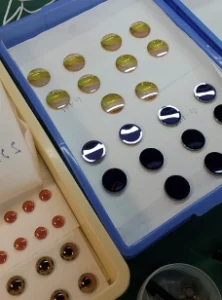
The infrared lens collects infrared energy from the target or surrounding scene. It then focuses that energy onto the thermal detector.
Manufacturers commonly design infrared lenses for either the LWIR or MWIR wavelength range.
LWIR lenses usually work with uncooled thermal imaging systems. In contrast, MWIR lenses commonly work with cooled infrared systems that require longer detection ranges or greater sensitivity.
Common types of infrared lenses include:
- Fixed focus lenses
- Manual focus lenses
- Motorized focus lenses
- Continuous zoom lenses
- Dual field-of-view lenses
- Athermalized lenses
The correct lens depends on several factors, including detector resolution, pixel size, focal length, field of view, target distance, and operating environment.
Lens Housing or Casing
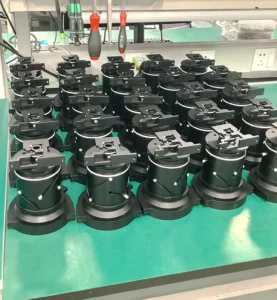
The lens housing holds the optical elements in the correct position. It also provides a stable mechanical interface between the lens and the thermal core or camera system.
For motorized focus or zoom lenses, the housing may contain motors, gears, guides, bearings, and other mechanical parts. These parts move the optical elements during focusing or zooming.
As a result, a properly designed lens housing helps maintain optical alignment, image stability, and reliable mechanical performance. It can also make system integration easier for the customer.
Lens Control Board
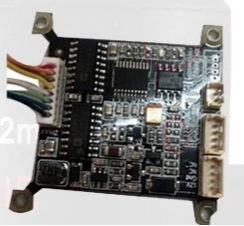
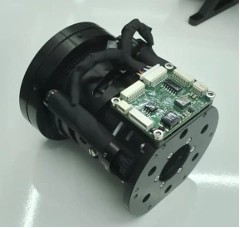
A fixed focus lens normally does not require a lens control board. However, motorized focus lenses, continuous zoom lenses, and dual field-of-view lenses often use one.
The lens control board sends commands to the lens motors and controls the movement of the optical elements.
Depending on the lens design, the control board can manage:
- Motorized focus adjustment
- Motorized zoom movement
- Field-of-view switching
- Motor speed and direction
- Lens position feedback
- Limit position detection
- Communication with the thermal core
- Communication with the customer’s main system
For example, an LWIR zoom lens module can use the lens control board to move smoothly from a wide view to a narrow view. Therefore, operators can search a large area first and then zoom in to identify or track a distant target.
This function is especially useful for surveillance, border monitoring, maritime observation, and long-range thermal imaging.
Thermal Core
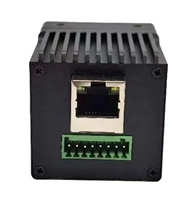
The thermal core acts as the imaging section of the system.
It normally includes an infrared detector, image-processing electronics, and communication interfaces. The detector receives infrared energy from the lens and converts it into an electrical signal. The image-processing electronics then process the signal and create a thermal image.
In simple terms:
- The infrared lens collects and focuses the infrared energy.
- The thermal core converts that energy into a thermal image.
Thermal cores can use either cooled or uncooled detectors.
Uncooled thermal cores commonly work with LWIR lenses. They offer compact size, lower power consumption, and simpler system integration.
Cooled thermal cores commonly work with MWIR lenses. Although they require a cooling system, they can provide greater sensitivity and longer-range detection performance.
For project evaluation, customers may provide the thermal core specifications, such as detector resolution, pixel size, detector type, image format, mechanical interface, and required field of view.
If available, customers may also share the 2D drawing and 3D STP file of the thermal core or camera interface. This helps us review the mechanical matching, mounting interface, back focal distance, and integration space more accurately.
Based on this information, we can evaluate whether the selected thermal core is suitable to match with our infrared lens. If required, we can also review the lens interface and optical matching requirements based on the customer’s thermal core specification.
How Do the Components Work Together?
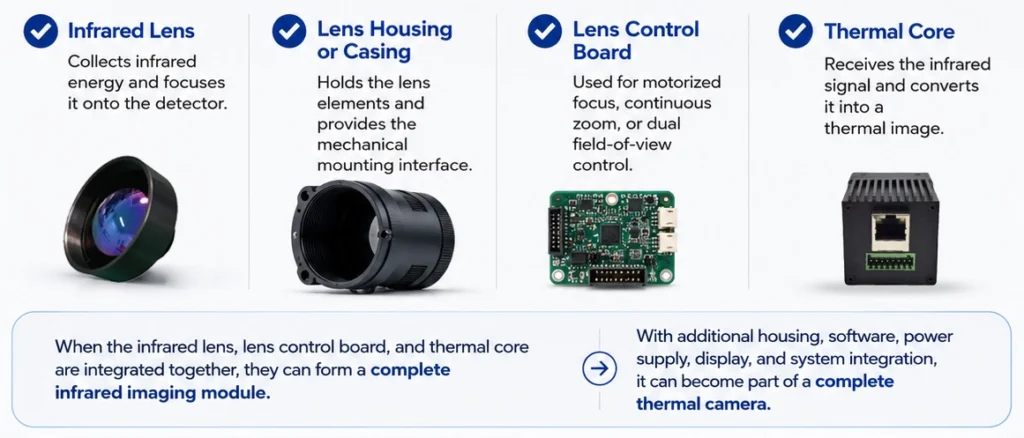
A complete infrared imaging module may combine:
Infrared lens + lens housing + lens control board + thermal core
First, the infrared lens collects energy from the target and focuses it onto the detector.
Next, the lens control board manages focus, zoom, or field-of-view movement when the lens requires motorized control.
Then, the thermal core converts the received infrared energy into an image signal and processes it into a visible thermal image.
Finally, engineers can integrate the module with an outer housing, power supply, software, display, communication system, and mounting structure.
Therefore, the infrared lens module acts as the central optical and imaging assembly inside a complete thermal camera or thermal imaging system.
Infrared Lens Module vs Thermal Camera
An infrared lens module and a thermal camera are closely related. However, they do not always refer to the same product.
An infrared lens module normally refers to the optical and imaging assembly. It may include the lens, housing, lens control board, and thermal core.
In contrast, a thermal camera usually refers to a more complete product that the operator can use directly. It may include the infrared lens module, external housing, power supply, software, communication interface, image output, and mounting structure.
| Item | Infrared Lens Module | Thermal Camera |
|---|---|---|
| Main Purpose | Optical and imaging assembly | Complete thermal imaging product |
| Common Parts | Lens, lens housing, lens control board, thermal core | Lens module, housing, electronics, software, display/interface |
| Customization | Often customized for OEM integration | Usually ready for end use |
| Common Use | Integrated into another system | Used directly as a camera system |
Example: LWIR Zoom Lens Module
An LWIR zoom lens module may include:
- LWIR continuous zoom lens
- Motorized zoom mechanism
- Motorized focus mechanism
- Lens housing
- Lens control board
- Uncooled thermal core
- Mechanical mounting interface
- Power and communication cable
For example, the lens may provide a focal length range of 20–120 mm.
At the 20 mm position, the lens provides a wider field of view for searching and monitoring a large area. At the 120 mm position, it provides a narrower field of view for observing a distant target in greater detail.
As a result, this type of module can support both target searching and long-range observation.
Example specification:
| Item | Example Specification |
|---|---|
| Module Type | LWIR zoom lens module |
| Wavelength Range | 8–12 µm |
| Lens Type | Continuous zoom lens |
| Focal Length | 20–120 mm |
| F-number | F/1.1 |
| Detector Type | Uncooled LWIR thermal core |
| Detector Resolution | 640 × 512 |
| Pixel Size | 12 µm |
| Control Function | Motorized focus and motorized zoom |
| Control Component | Lens control board included |
| Application | Thermal imaging, surveillance, long-range observation |
| Interface | Customizable based on system requirement |
Common Applications
Infrared lens modules are commonly used in:
- Thermal cameras
- Security and surveillance systems
- Long-range observation systems
- Maritime monitoring
- Border monitoring
- Industrial inspection
- Fire detection
- Aerospace systems
- Defense imaging systems
- Search and rescue equipment
- OEM thermal imaging platforms
What Information Should You Provide Before Requesting a Quote?
To request an infrared lens module, it is helpful to provide:
- Wavelength range: LWIR or MWIR
- Lens type: fixed focus, motorized focus, zoom, or dual FOV
- Focal length or field of view requirement
- Detector resolution
- Pixel size
- 2D drawing and 3D STP file of the thermal core or camera interface, if available
- Lens control board requirement
- Communication interface requirement
- Mechanical mounting interface
- Operating environment
- Quantity
- Application or system use
For projects involving a thermal core, customers may share the thermal core datasheet, 2D drawing, and 3D STP file. Our team can review whether the thermal core can be matched with the infrared lens and advise the suitable lens option for the application.
Conclusion
An Infrared Lens Module can include much more than an infrared lens.
Depending on the system design, the module may contain an infrared lens, lens housing, focus or zoom mechanism, lens control board, thermal core, cables, and mechanical interfaces.
The infrared lens collects and focuses infrared energy. Meanwhile, the lens control board manages motorized movement, and the thermal core converts the infrared energy into a thermal image.
When these components work together, they form a complete infrared imaging module. With additional housing, power, software, display, and system integration, the module can become part of a finished thermal camera.
Shape Optics provides LWIR and MWIR infrared lens modules, including fixed focus lenses, motorized focus lenses, continuous zoom lenses, dual field-of-view lenses, thermal core integration, and customized infrared imaging solutions.
Contact us to discuss your Infrared Lens Module requirements.