Lenses for Long-Wave Infrared (LWIR) Cameras for 8-12 µm

LWIR Continuous Zoom Lens

LWIR Continuous zoom lens allow users to adjust focal lengths seamlessly without needing to swap lenses, providing a dynamic solution for varying object distances. These lenses combine the benefits of both fixed and manual lenses, offering flexibility for a wide range of thermal imaging applications, from monitoring and surveillance to industrial inspections.

Ideal for situations requiring adaptable zoom and focus, these lenses ensure crisp and clear images at any zoom level, enabling quick scene changes and real-time adjustments in critical applications.
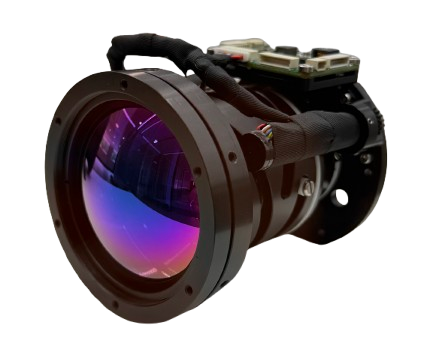
LWIR Continuous Zoom Lens

LWIR Continuous Zoom Lens Overview

Seamless Zoom Adjustment

Provides smooth, continuous zoom capabilities without the need to change lenses.

Wide Focal Length Range

Enables quick zoom transitions, covering a broad focal length range for flexible viewing and analysis.

Adaptable for Dynamic Scenes

Ideal for surveillance, monitoring, and real-time analysis where scene distances vary.

Enhanced Flexibility and Efficiency

Minimizes downtime and enhances operational efficiency by eliminating the need to change lenses.

How Does Continuous Zoom Work?

A continuous zoom infrared lens changes its effective focal length smoothly between wide-angle and narrow-angle viewing positions. Unlike dual-field-of-view lenses, which switch between two predetermined focal lengths, continuous zoom systems provide adjustable magnification across a specified range.

At shorter focal lengths, the lens provides a wider field of view for observing large areas. At longer focal lengths, it provides a narrower field of view for examining distant objects in greater detail.

LWIR zoom optics are commonly integrated with motorized zoom and focus mechanisms, allowing operators to adjust the image remotely. Depending on the optical design, additional focusing may be required to maintain image sharpness during zoom adjustment.

LWIR Continuous Zoom Lens

Key Considerations for Lens Selection

Selecting a suitable LWIR zoom lens requires evaluating detector compatibility, optical performance, zoom requirements, and mechanical integration.

Parameter Selection Considerations
Focal Length & Zoom Range Determine the required wide-angle and telephoto viewing ranges.
Detector Compatibility Match detector resolution, pixel pitch, and image format.
F-number (F/#) Evaluate optical aperture and thermal imaging requirements.
Optical Performance Review MTF, distortion, transmission, and image quality across the zoom range.
Motorized Control Check zoom/focus control interfaces, positioning accuracy, and power requirements.
Mechanical Integration Confirm mounting dimensions, weight, and available installation space.
Environmental Conditions Consider operating temperature, vibration, and reliability requirements.

Explore our LWIR lens solutions or contact our engineering team to discuss detector compatibility and custom optical requirements.

Applications in Infrared Imaging

LWIR continuous zoom optics support imaging systems that require adjustable fields of view and flexible observation distances.

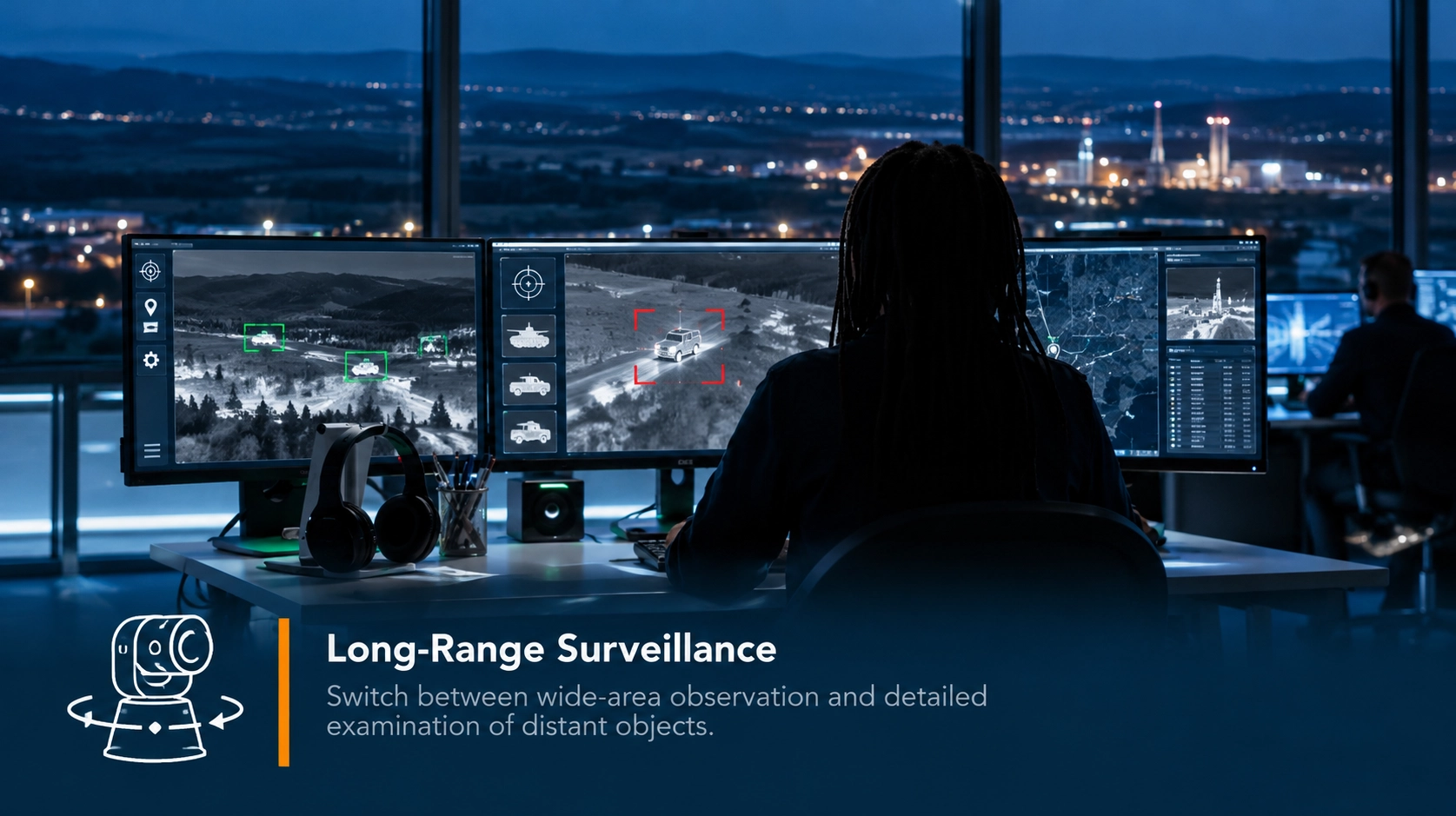
  • Long-Range Surveillance: Switch between wide-area observation and detailed examination of distant objects.
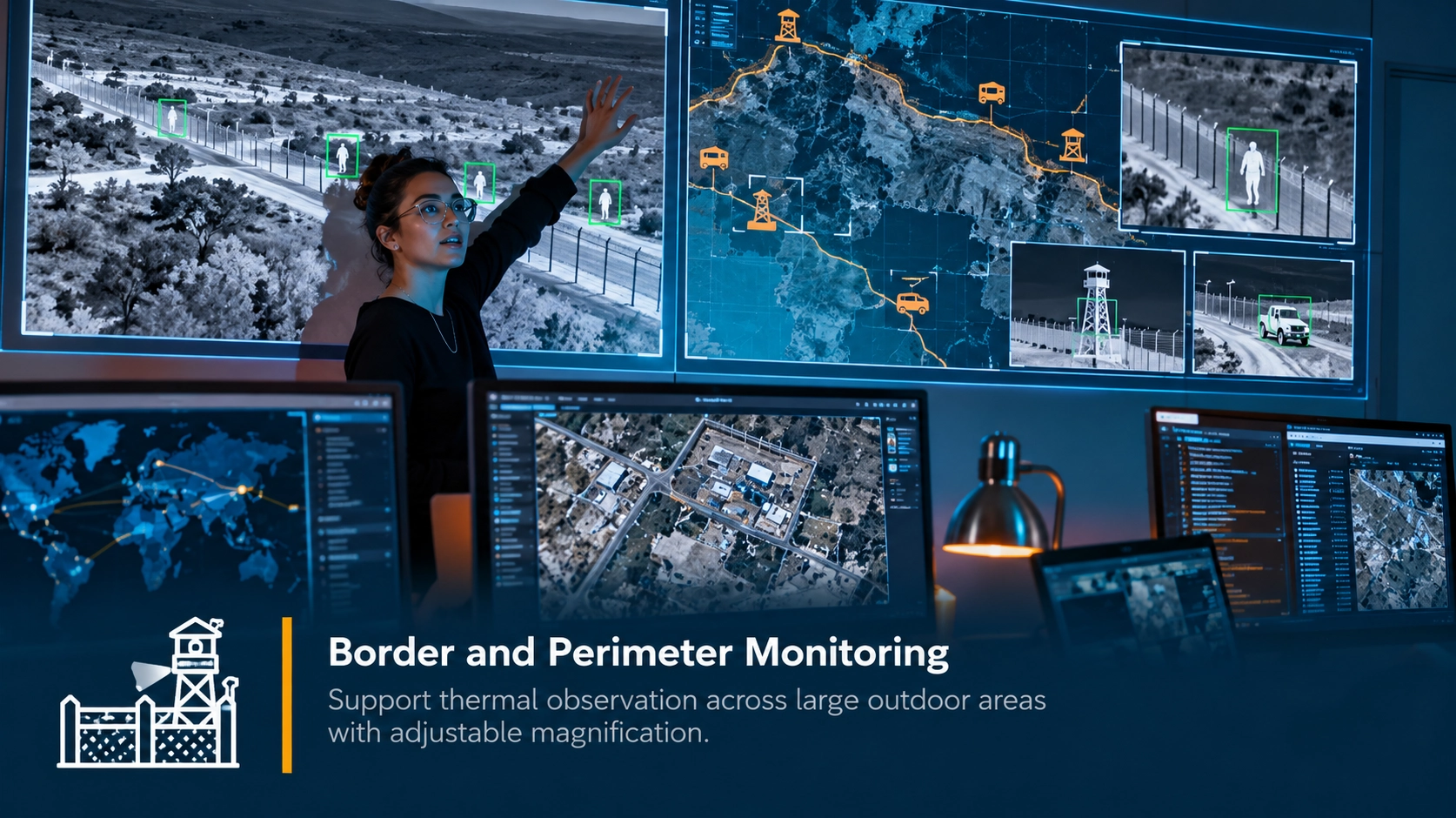
  • Border and Perimeter Monitoring: Support thermal observation across large outdoor areas with adjustable magnification.
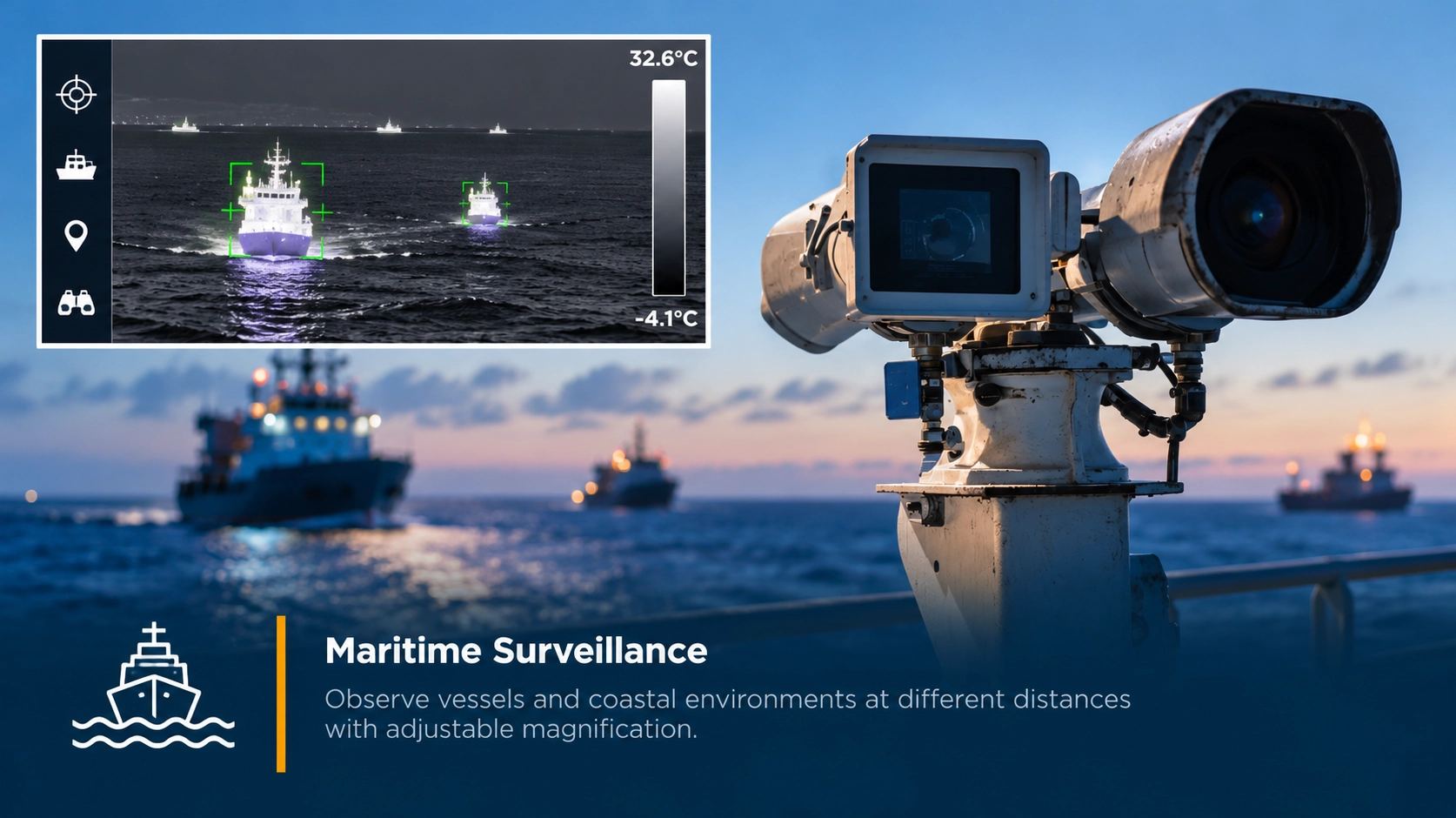
  • Maritime Surveillance: Observe vessels and coastal environments at different distances.
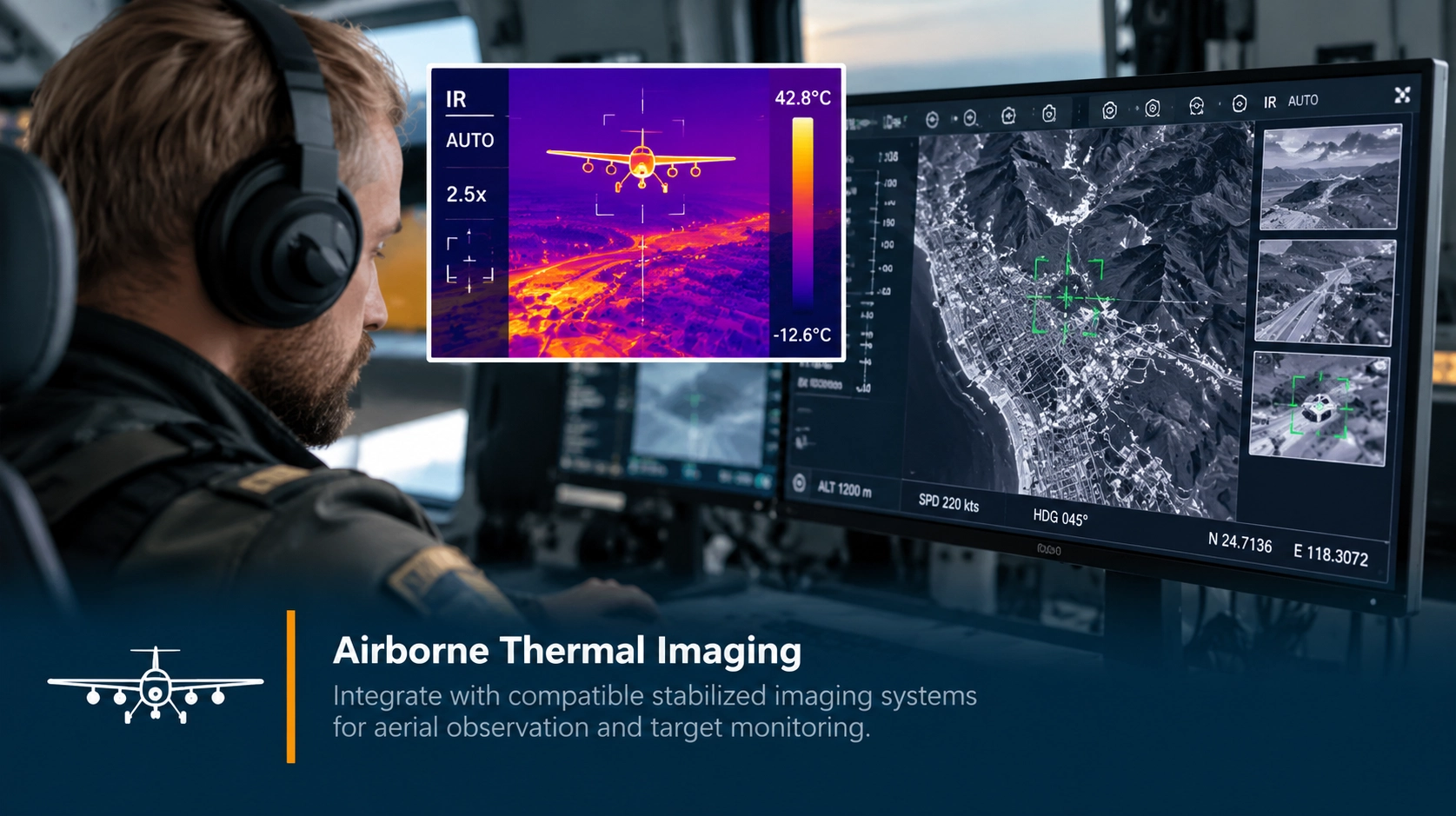
  • Airborne Thermal Imaging: Integrate with compatible stabilized imaging systems for aerial observation and target monitoring.
Airborne Thermal Imaging Command Center
Maritime Thermal Surveillance System
Border Perimeter Monitoring Center
Long-Range Surveillance Command Center

Request Quote

Need a custom LWIR lens?

Tell us your detector, focal length, and requirements — our engineering team will support your design.