Lenses for Mid-Wave Infrared (MWIR) Cameras for 3–5 µm

MWIR Dual Field-of-view (FOV) Lens

Shape Optics provides MWIR dual FOV lenses for cooled thermal imaging systems operating in the 3–5 µm wavelength range. These lenses switch between two predefined fields of view, enabling wide-area observation and detailed imaging of distant objects.

Designed for applications requiring rapid changes in viewing angle, our dual field-of-view lenses support motorized switching, reliable optical performance and integration with compatible infrared detectors.


dual FOV lens

MWIR Dual FOV Lens Overview

MWIR Dual FOV Lens Overview

Enhanced Situational Awareness

The wide FOV mode enables broad area surveillance and target detection, while the narrow FOV mode provides increased magnification for identification and tracking.

High Image Quality

Designed using high-performance infrared optical materials and coatings to deliver superior image clarity, contrast, and thermal imaging performance throughout the MWIR spectrum.

Dual Viewing Modes

Instantly switch between wide-angle and narrow-angle fields of view to accommodate different operational requirements.

Fast and Reliable Switching

Engineered with robust optical and mechanical designs to ensure smooth, accurate, and repeatable FOV transitions.

How Does a Dual FOV Lens Work?

A dual field-of-view lens provides two predefined focal-length configurations: a wide field of view (WFOV) and a narrow field of view (NFOV).

The wide FOV allows operators to monitor larger areas and locate objects of interest, while the narrow FOV provides greater image scale for examining distant objects.

Unlike continuous zoom lenses, which offer adjustable focal lengths throughout a zoom range, dual FOV lenses switch between two fixed optical configurations.

Motorized switching mechanisms allow operators to change between wide and narrow viewing modes without manually adjusting the optical assembly.

dual FOV lens

Key Considerations for Lens Selection

Selecting the appropriate MWIR dual FOV lens depends on detector compatibility, optical performance and system requirements.

Parameter Selection Considerations
Wide & Narrow Focal Lengths Determine the required viewing angles and observation distances for both modes.
FOV Ratio Evaluate the relationship between wide and narrow focal lengths.
Detector Compatibility Match detector resolution, pixel pitch and image format.
F-number (F/#) Consider optical aperture and compatibility with the cooled detector system.
Switching Mechanism Evaluate motorized switching, response time and control interface requirements.
Optical Performance Review MTF, transmission and image quality in both viewing modes.
Environmental Conditions Consider operating temperature, vibration and mechanical integration.

Not sure which infrared lens configuration is suitable for your application? Explore our MWIR lens solutions or contact our engineering team for assistance with detector compatibility and custom optical requirements.

Applications in Infrared Imaging

MWIR dual FOV lenses are suitable for systems requiring both wide-area monitoring and detailed observation.

Application Description
Long-Range Surveillance Switch between wide-area monitoring and narrow-field observation of distant objects.
Border & Perimeter Monitoring Support broad-area scanning and focused observation.
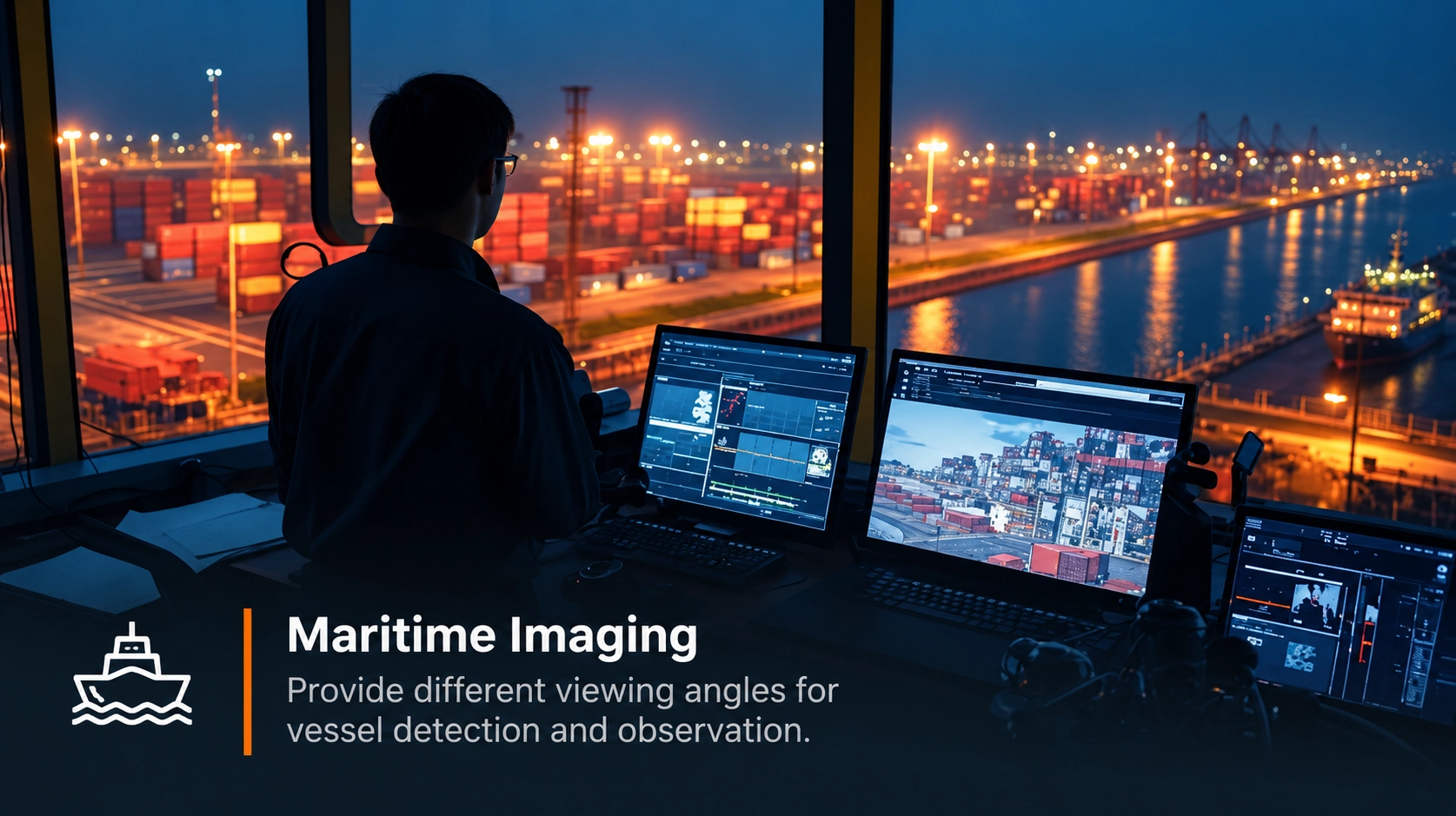
Maritime Imaging Provide different viewing angles for vessel detection and observation.
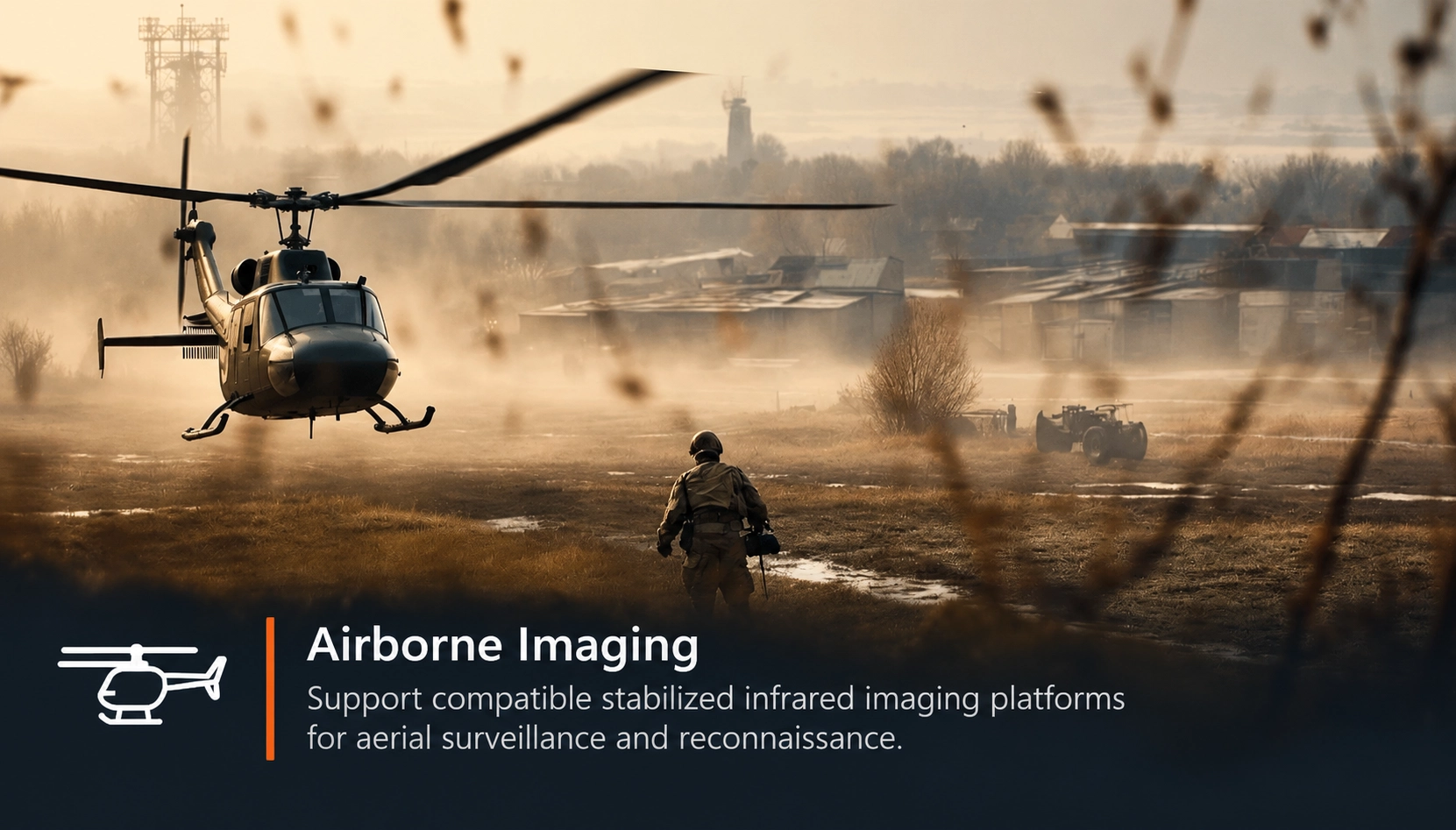
Airborne Imaging Support compatible stabilized infrared imaging platforms.
Long-Range-Thermal-Surveillance
Border & Perimeter Monitoring
Maritime Imaging Control Room
Airborne Imaging in Misty Operations

Request Quote

Custom MWIR Optical Design and Integration

Shape Optics supports standard and customized MWIR optical solutions according to system requirements. Customization may include focal-length range, detector compatibility, optical performance, mechanical dimensions, and motorized control integration.

Customers can provide detector specifications, required focal lengths, F-number, operating conditions, and mechanical constraints for technical evaluation.