Lenses for Mid-Wave Infrared (MWIR) Cameras for 3–5 µm

MWIR Manual Focus Lens

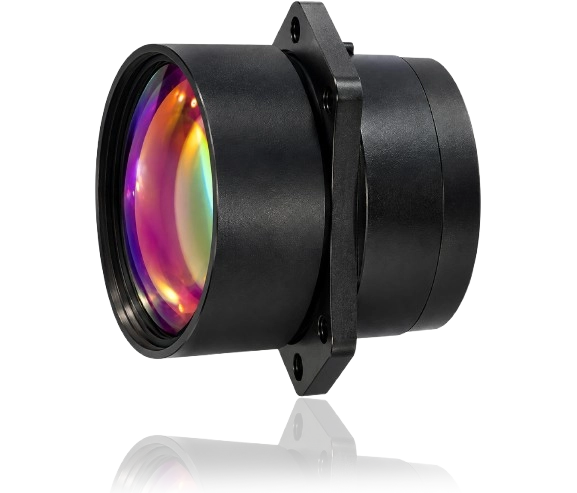
Shape Optics provides MWIR manual focus lenses for thermal imaging systems operating in the 3–5 µm wavelength range. Manual focus adjustment allows operators to optimize image sharpness for different object distances through direct mechanical adjustment of the lens.
Available in a range of focal lengths and detector configurations, these lenses provide a practical solution for MWIR imaging systems where simple operation, reliable optical performance, and direct focus control are required.
Manual Focus Lens

MWIR Manual Focus Lens Overview

Precise Focusing Control

Manual focus adjustment enables accurate optimization of image sharpness for varying object distances and mission requirements.

Flexible System Integration

Available in a variety of focal lengths, detector formats, and optical configurations to support a wide range of thermal imaging applications.

High Image Quality

Designed with advanced infrared optical materials and high-performance coatings to deliver excellent image contrast and resolution throughout the MWIR spectrum.

Robust Construction

Engineered for reliable operation in industrial, scientific, surveillance, and defense environments, ensuring long-term performance and durability.

How Does Manual Focus Work?

A Manual Focus lens allows the operator to adjust the position of the focusing optical group directly through a mechanical focus mechanism. This changes the focus position to maintain image sharpness when the object distance changes.

Manual focusing is particularly suitable for systems where the observation distance is set during installation or only requires occasional adjustment. Once the desired focus position is achieved, the lens can remain fixed for normal operation.

Compared with motorized focus lenses, manual focus designs do not require an electronic focus drive or external focus controller, helping simplify system integration.

Manual Focus Lens

Key Considerations for Lens Selection

Selecting a suitable MWIR manual focus lens depends on the detector, required field of view, focusing distance, and system integration requirements.

Parameter Selection Considerations
Focal Length Determine the required field of view and observation distance.
Detector Compatibility Match the lens to detector resolution, pixel pitch, and active image size.
F-number (F/#) Select an aperture compatible with the detector and required optical performance.
Focus Range Consider the required object distances and available manual focus adjustment range.
Focus Mechanism Review the adjustment method, focus travel, and locking requirements.
Optical Performance Evaluate MTF, distortion, transmission, and image quality.
Mechanical Interface Confirm mounting interface, available space, and maximum dimensions.
Environment Consider operating temperature, vibration, and environmental requirements.

Looking for a different focusing configuration? Explore our MWIR lens solutions or MWIR motorized focus lenses, or contact our engineering team for assistance selecting a lens for your detector and imaging requirements.

Applications in Infrared Imaging

MWIR Manual Focus lenses are suitable for imaging systems where focus can be adjusted directly during setup, calibration, or operation.

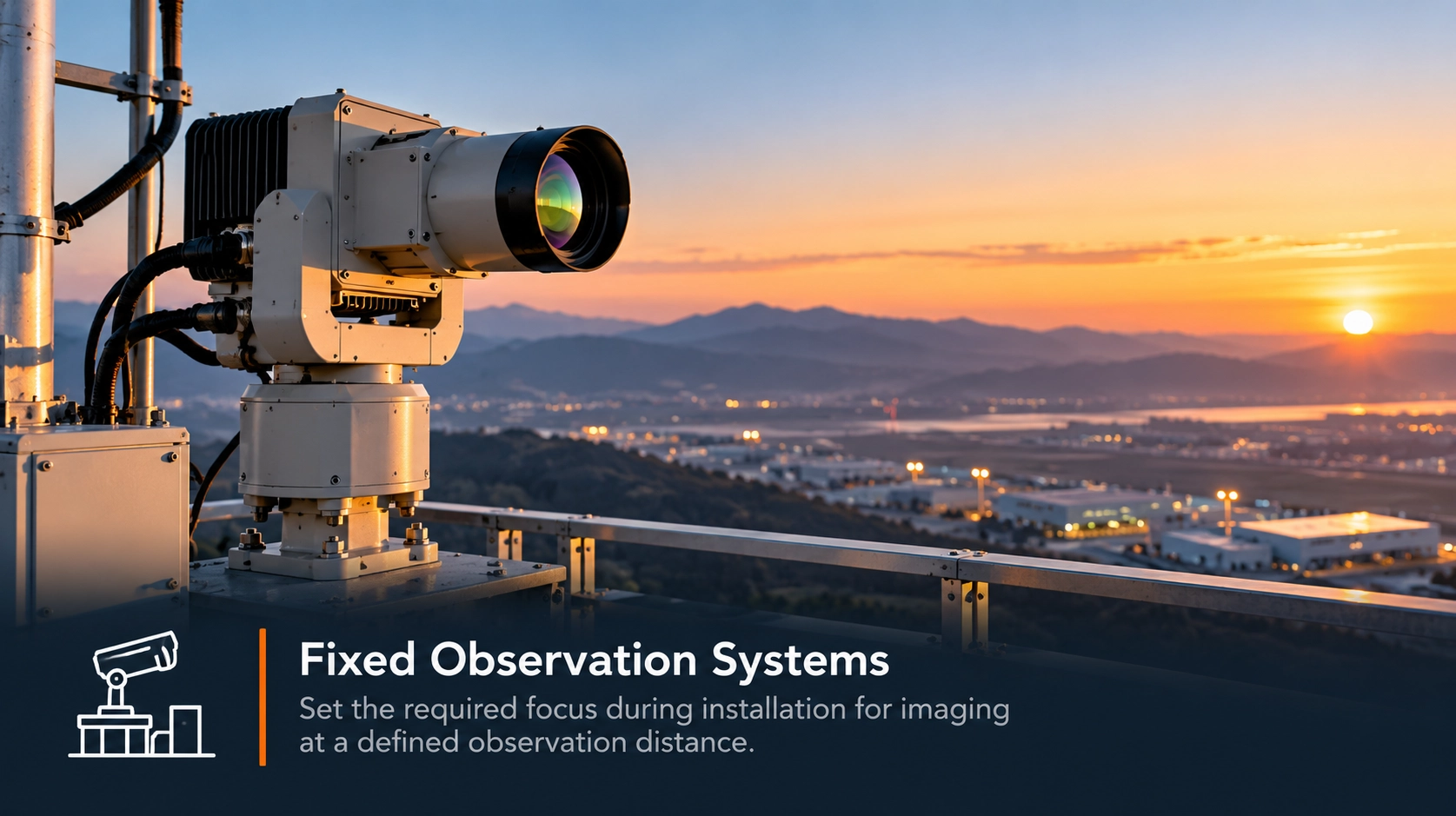
  • Fixed Observation Systems: Set the required focus during installation for imaging at a defined observation distance.
  • Industrial Thermal Inspection: Manually adjust focus when inspecting equipment and components at different working distances.
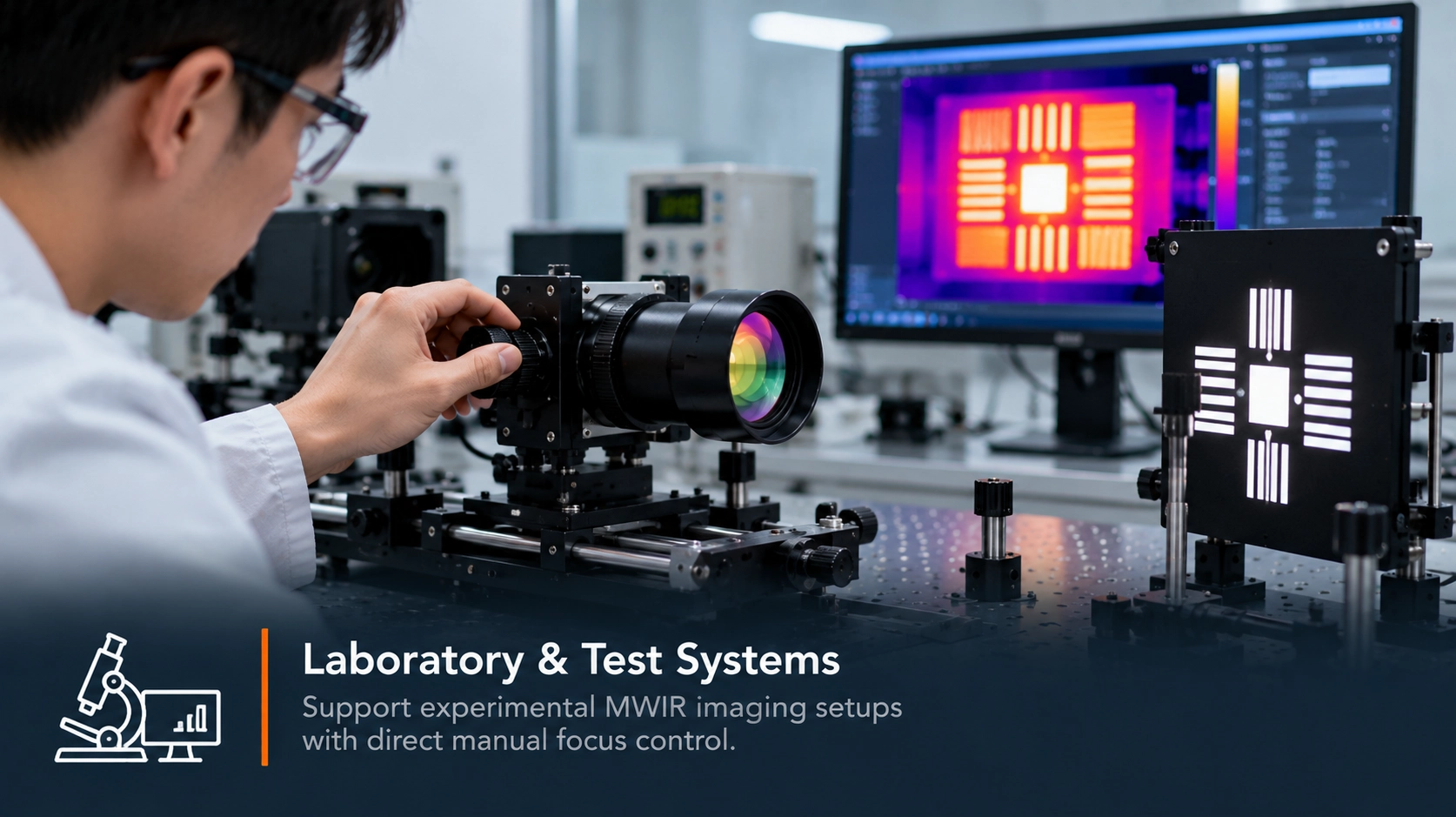
  • Laboratory & Test Systems: Support experimental MWIR imaging setups where operators require direct control over focus position.
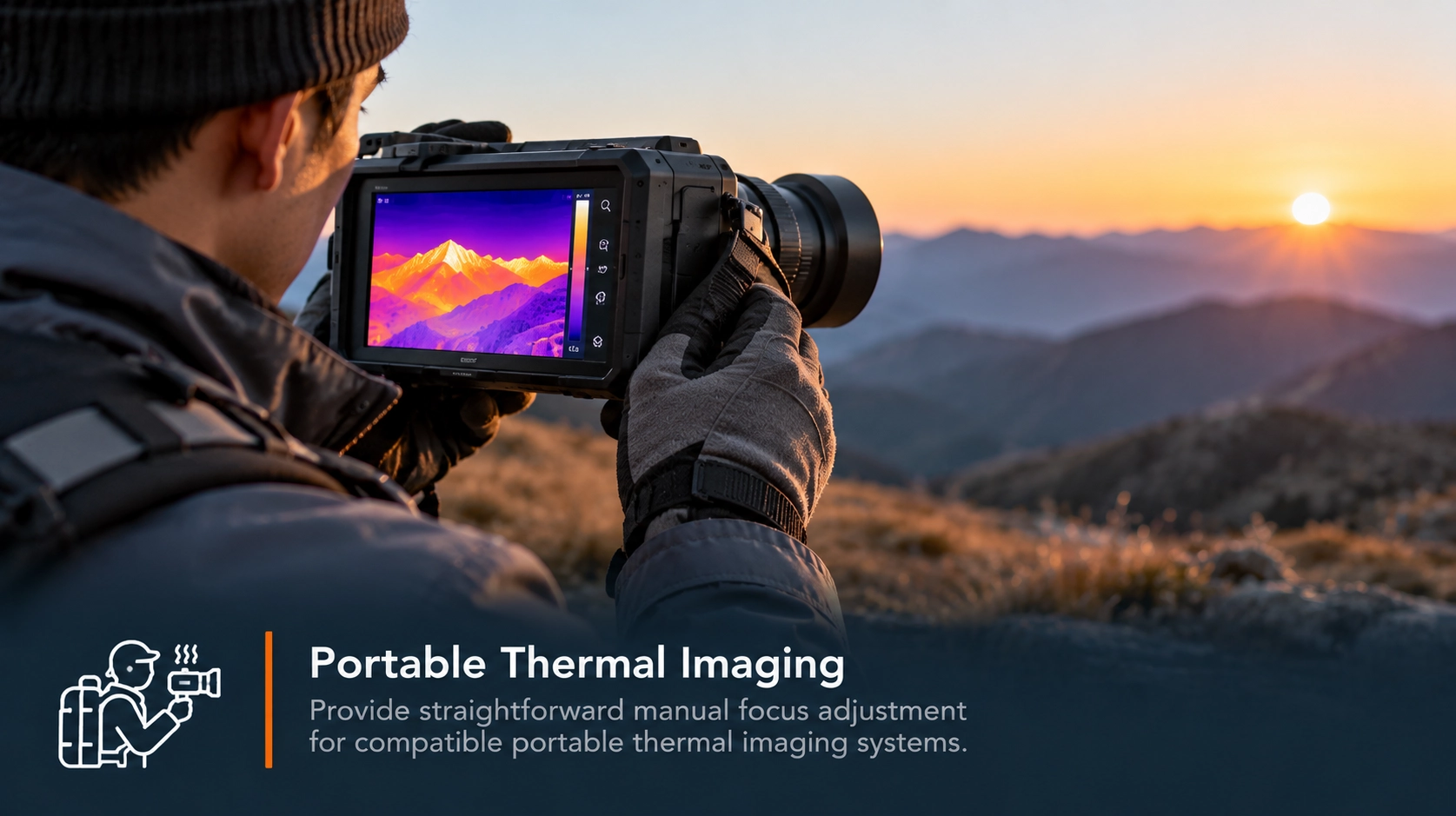
  • Portable Thermal Imaging: Provide straightforward focus adjustment for compatible portable or operator-controlled imaging systems.
Fixed Observation Systems at Sunset
Laboratory MWIR Imaging Test Setup
Industrial Thermal Inspection
Portable Thermal Imaging at Sunrise

Request Quote

Custom MWIR Optical Design and Integration

Shape Optics supports standard and customized MWIR optical solutions according to system requirements. Customization may include focal-length range, detector compatibility, optical performance, mechanical dimensions, and motorized control integration.

Customers can provide detector specifications, required focal lengths, F-number, operating conditions, and mechanical constraints for technical evaluation.