Lenses for Mid-Wave Infrared (MWIR) Cameras for 3–5 µm

MWIR Motorized Focus Lens

Shape Optics provides MWIR motorized focus lenses for cooled thermal imaging systems operating in the 3–5 µm spectral range. Integrated motorized focusing enables remote adjustment of image focus for changing observation distances without manual lens adjustment.

Available configurations can be matched to detector format, pixel pitch, focal length, F-number, mechanical interface and control requirements for surveillance, industrial imaging and other MWIR systems.
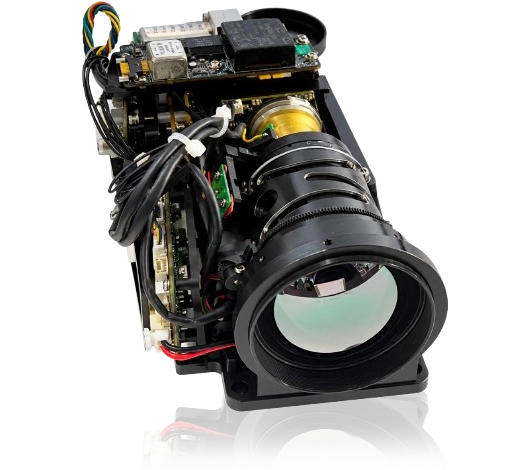
motorize focus

MWIR Motorized Focus Lens Overview

Remote Focus Control

Allows users to adjust focus electronically from a control system, enabling precise remote focus control without direct lens handling.

Precise and Repeatable Positioning

High-accuracy motorized mechanisms provide smooth, reliable, and repeatable focus adjustments for critical imaging tasks.

High Image Quality

Optimized for MWIR imaging applications, delivering excellent resolution, contrast, and thermal imaging performance across the 3–5 µm spectrum.

Wide Range of Configurations

Available in various focal lengths, detector formats, and interface options to support diverse thermal imaging system requirements.

How Motorized Focus Works

Motorized focus lenses use an integrated drive mechanism to adjust the position of the focusing optical group. This allows the imaging system to compensate for changes in object distance and maintain image sharpness without requiring manual adjustment at the lens.

Focus commands can be controlled remotely through a compatible camera or system controller, making motorized focusing particularly useful when the optical assembly is installed in an inaccessible location or integrated into an automated imaging platform.

Unlike a continuous zoom lens, motorized focusing adjusts image focus rather than continuously changing the focal length and field of view.

motorize focus

Key Considerations for Lens Selection

This is more commercially useful because it tells a potential customer what information to send you for an RFQ.

Requirement Information to Provide
Detector Resolution, pixel pitch and active image size
Focal Length Required focal length or field of view
F-number Required aperture and detector compatibility
Focus Range Required object/focusing distance
Focus Control Motor type, control interface or system requirements
Optical Performance MTF, distortion and transmission requirements
Mechanical Interface Mounting interface and maximum dimensions
Environment Operating temperature, vibration and environmental conditions

Need help defining your optical requirements? Explore our MWIR lens solutions or contact our engineering team with your detector specifications, focal length, F-number and integration requirements.

Applications in Infrared Imaging

MWIR motorized focus lenses are suitable for imaging systems that require remote or automated focus adjustment across different observation distances.

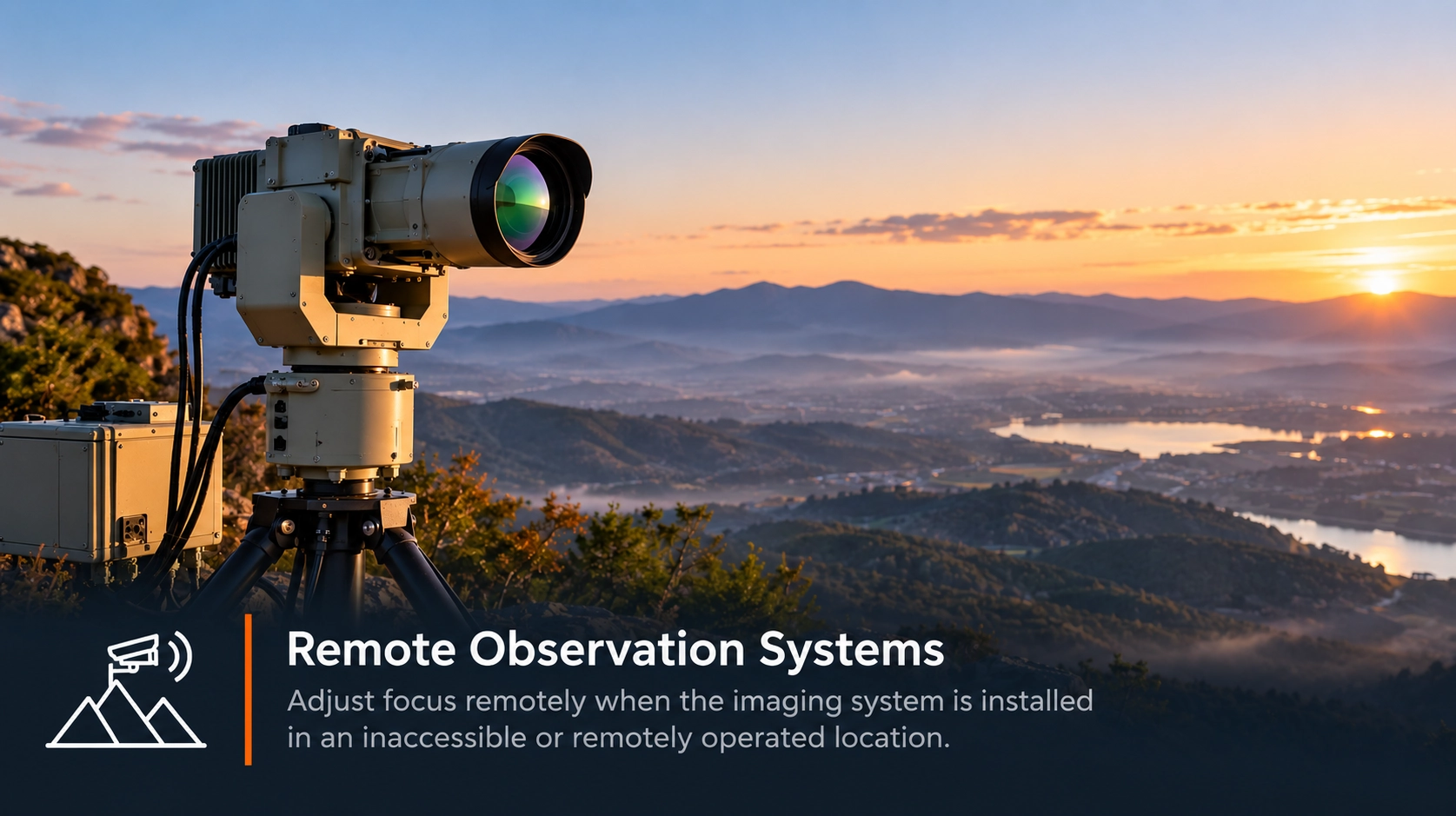
  • Remote Observation Systems: Adjust focus remotely when the imaging system is installed in an inaccessible or remotely operated location.
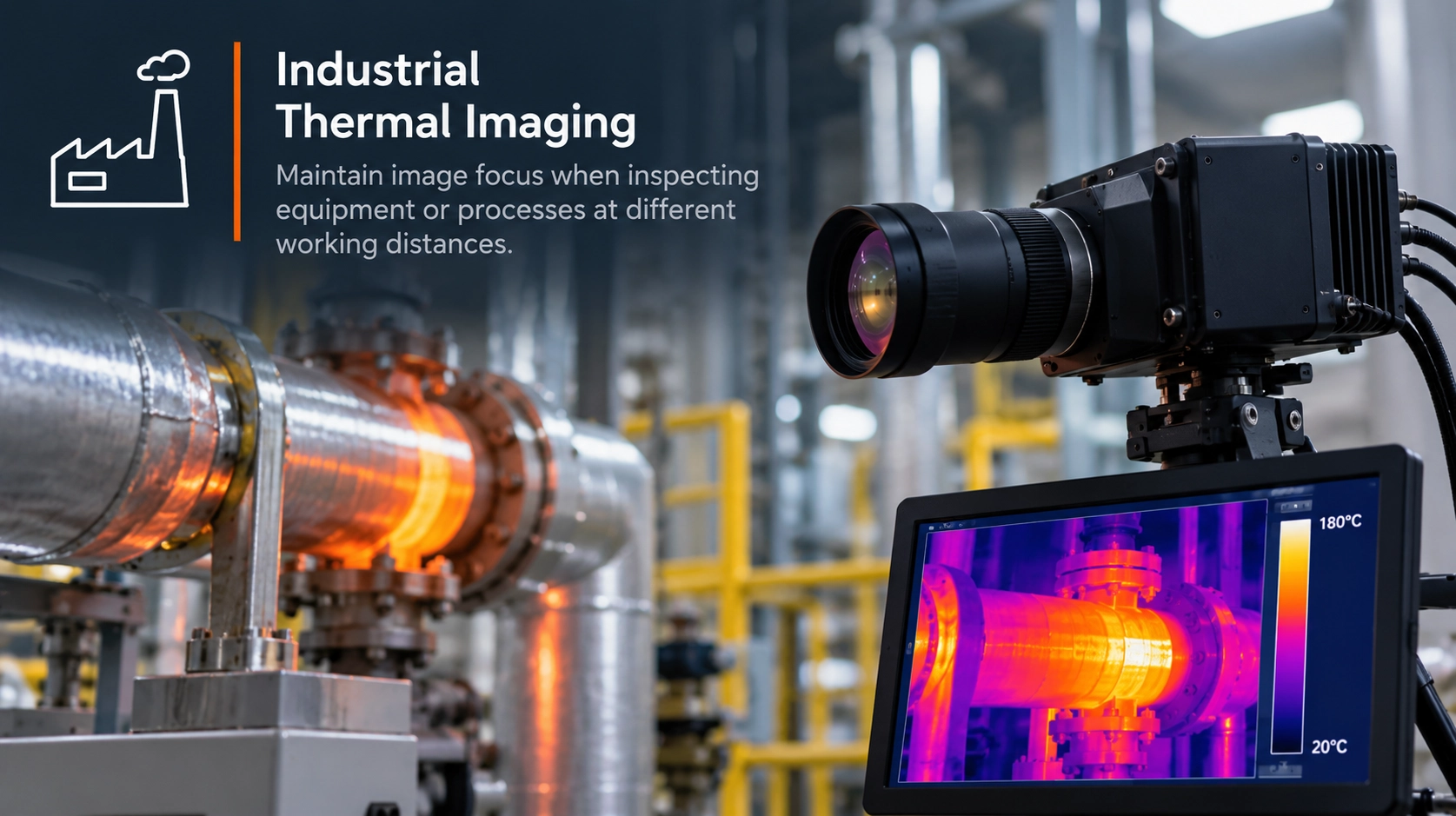
  • Industrial Thermal Imaging: Maintain image focus when inspecting equipment or processes at different working distances.
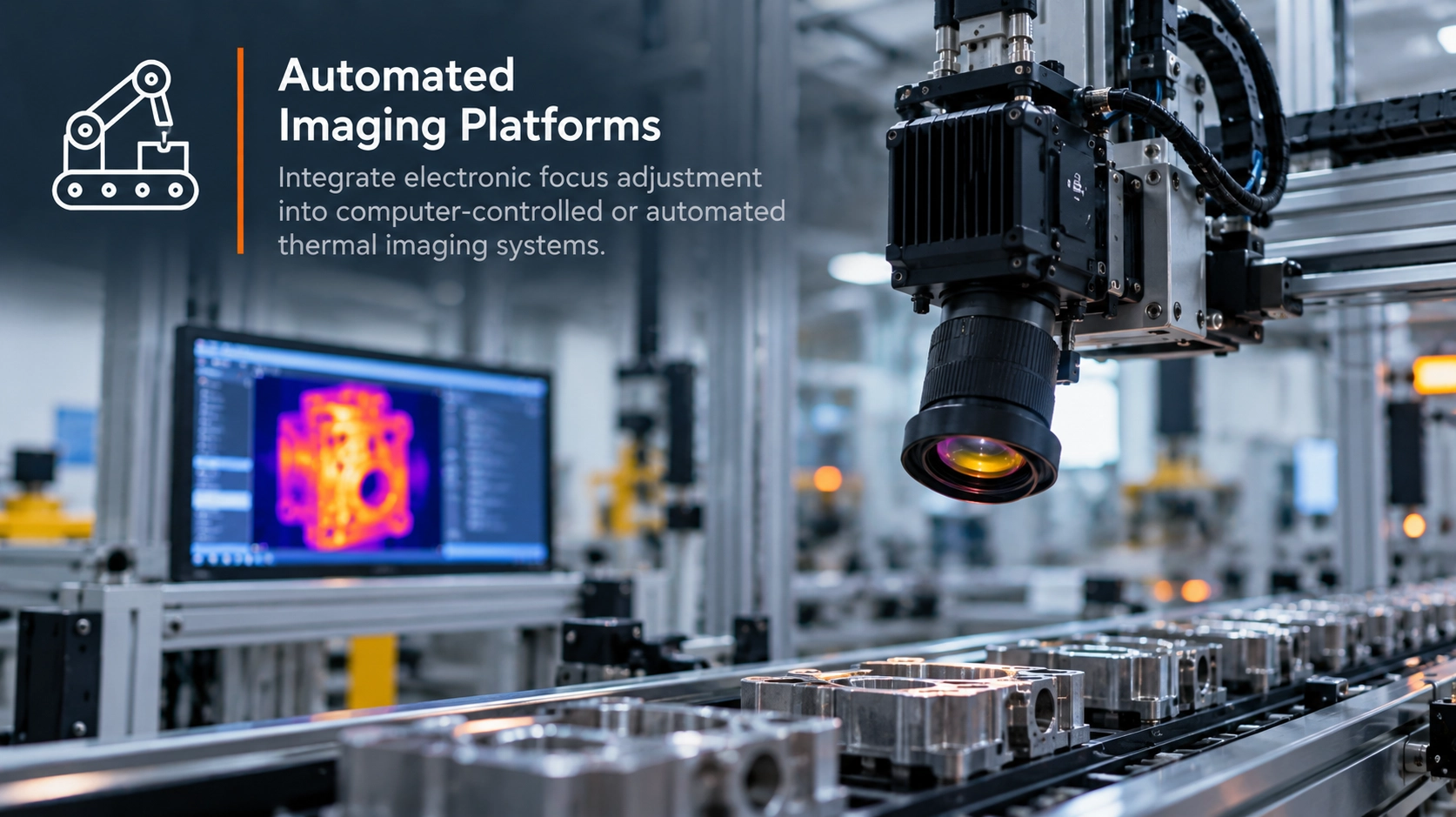
  • Automated Imaging Platforms: Integrate electronic focus adjustment into computer-controlled or automated thermal imaging systems.
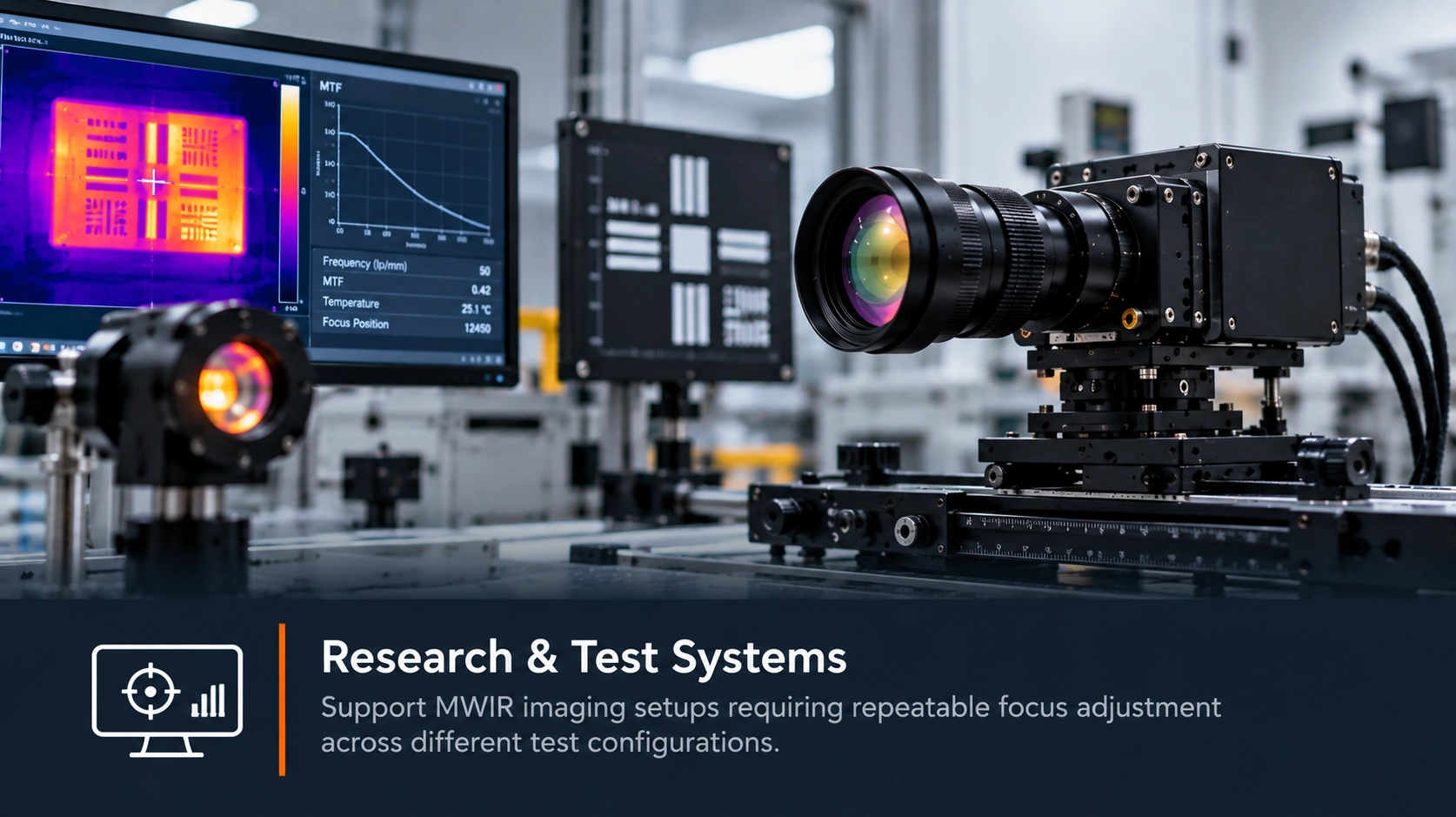
  • Research & Test Systems: Support MWIR imaging setups requiring repeatable focus adjustment across different test configurations.
Remote Observation Systems
Automated Imaging Inspection Line
Precision Optical Research Test Bench
Industrial Thermal Imaging Inspection

Available MWIR Motorized Focus Lens Models

Request Quote

Custom MWIR Optical Design and Integration

Shape Optics supports standard and customized MWIR optical solutions according to system requirements. Customization may include focal-length range, detector compatibility, optical performance, mechanical dimensions, and motorized control integration.

Customers can provide detector specifications, required focal lengths, F-number, operating conditions, and mechanical constraints for technical evaluation.