Lenses for Long-Wave Infrared (LWIR) Cameras for 8-12 µm

LWIR Athermal Lens

Shape Optics provides LWIR athermal lenses for thermal imaging systems operating in the 8–12 µm wavelength range. These lenses are designed to maintain stable focus and consistent image quality across changing environmental temperatures, reducing the need for frequent refocusing.

Our athermalized optical solutions support compatible uncooled infrared detectors and are available in various focal lengths, F-numbers, and mechanical configurations for surveillance, industrial monitoring, and outdoor thermal imaging applications.

LWIR Athermal Lens

LWIR Athermal Lens Overview

Temperature Stability

Designed to mitigate the effects of temperature variations, ensuring consistent focus and optical performance

High Quality

Manufactured using advanced materials and coatings to guarantee superior image quality across different wavelengths

Wide Range of Models

Available in various focal lengths and configurations to suit different optical system requirements

Durability

Built to withstand challenging environments, making them suitable for both industrial and scientific applications

How Does Athermal Work?

Temperature changes can affect the refractive index of infrared optical materials and cause thermal expansion or contraction of lens components. These changes may shift the focal plane, resulting in reduced image sharpness.

An LWIR athermal lens is designed to compensate for temperature-induced focus shifts through a combination of optical material selection, lens geometry, and mechanical design. This helps maintain imaging performance across a specified operating temperature range.

Unlike conventional lenses that may require manual or motorized refocusing as temperatures change, passive athermalized lenses are designed to maintain acceptable focus without continuous mechanical adjustment.

Why is athermalization important for LWIR imaging?

LWIR thermal cameras are frequently installed outdoors, where ambient temperatures can vary significantly between daytime and nighttime. Athermal optical designs help maintain focus stability and reduce the need for additional focus-control mechanisms.

This is particularly useful for compact uncooled thermal cameras, fixed installations, and systems requiring continuous operation.

LWIR Athermal Lens

Key Considerations for Lens Selection

Selecting a suitable LWIR athermal lens requires evaluating detector compatibility, optical performance, thermal stability, and mechanical integration.

Parameter Selection Considerations
Operating Temperature Range Define the minimum and maximum temperatures the optical system must withstand while maintaining acceptable focus.
Detector Compatibility Match the lens to the detector resolution, pixel pitch, and active image size.
Focal Length Select according to the required field of view and observation distance.
F-number (F/#) Match the optical aperture to detector sensitivity and imaging requirements.
Thermal Focus Stability Evaluate focus shift and image performance throughout the specified temperature range.
Optical Performance Review MTF, distortion, transmission, and image quality.
Mechanical Interface Confirm mounting dimensions, back focal distance, and available installation space.
Environmental Conditions Consider temperature cycling, humidity, vibration, and shock requirements.

Explore our complete range of LWIR lens solutions for different detector formats and imaging requirements. For applications requiring adjustable focus or magnification, consider our LWIR Manual Focus, Motorized Focus, or Continuous Zoom lens options.

Applications in Infrared Imaging

LWIR athermal lenses are used in thermal imaging systems where maintaining stable focus across changing environmental temperatures is important.

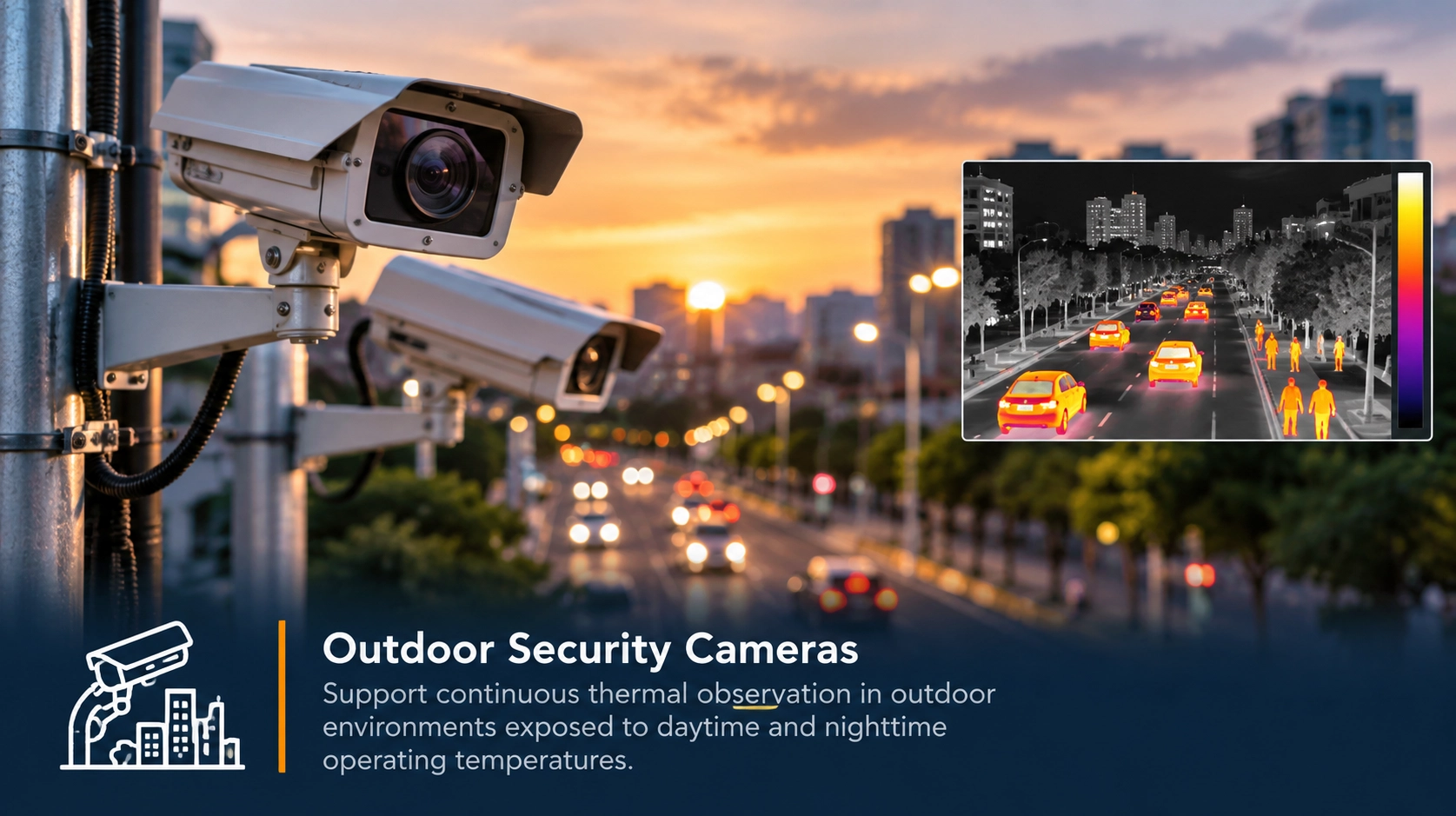
  • Outdoor Security Cameras: Support continuous thermal observation in outdoor environments exposed to daytime and nighttime temperature variations.
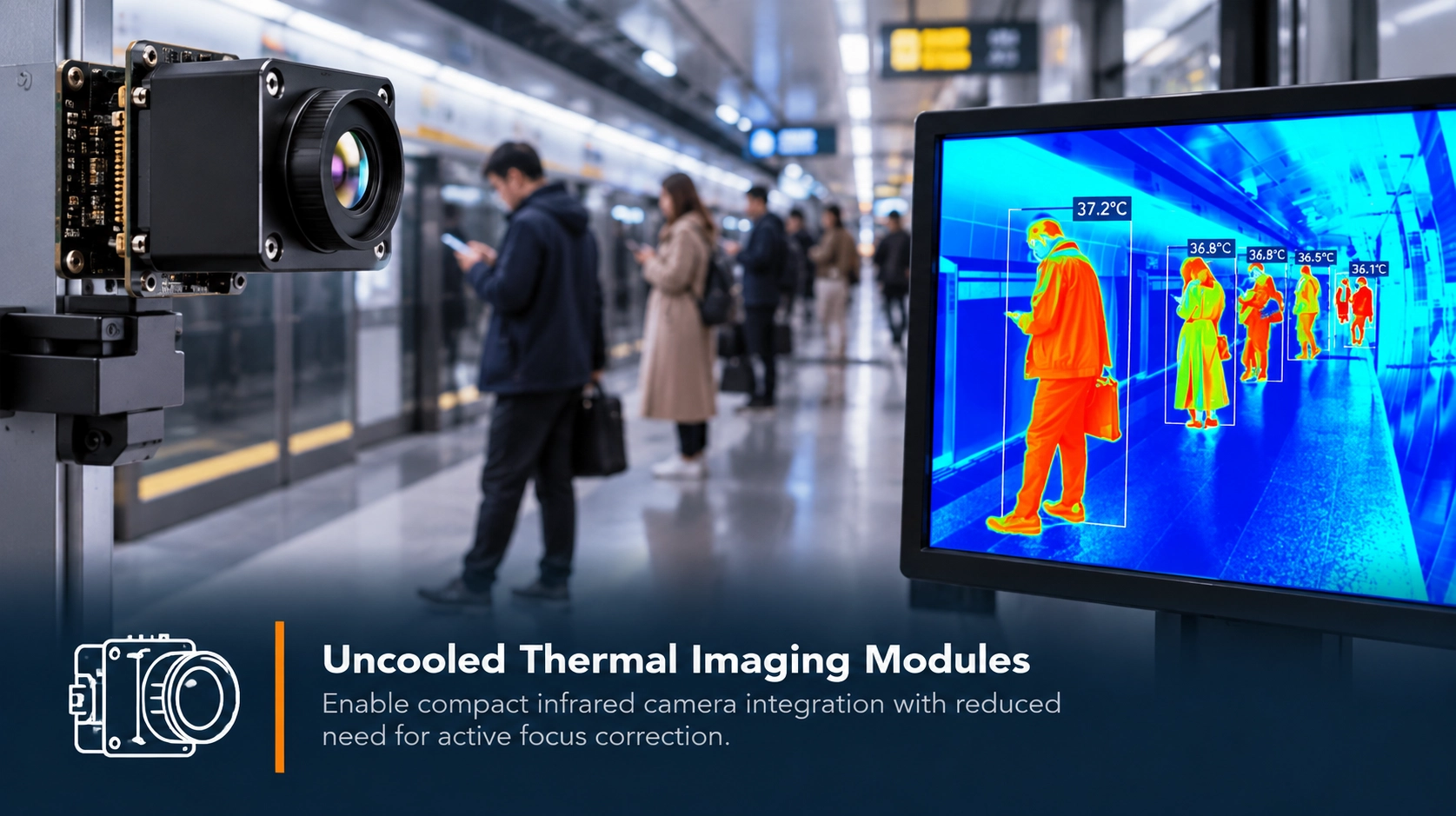
  • Uncooled Thermal Imaging Modules: Enable compact infrared camera integration with reduced need for active focus correction.
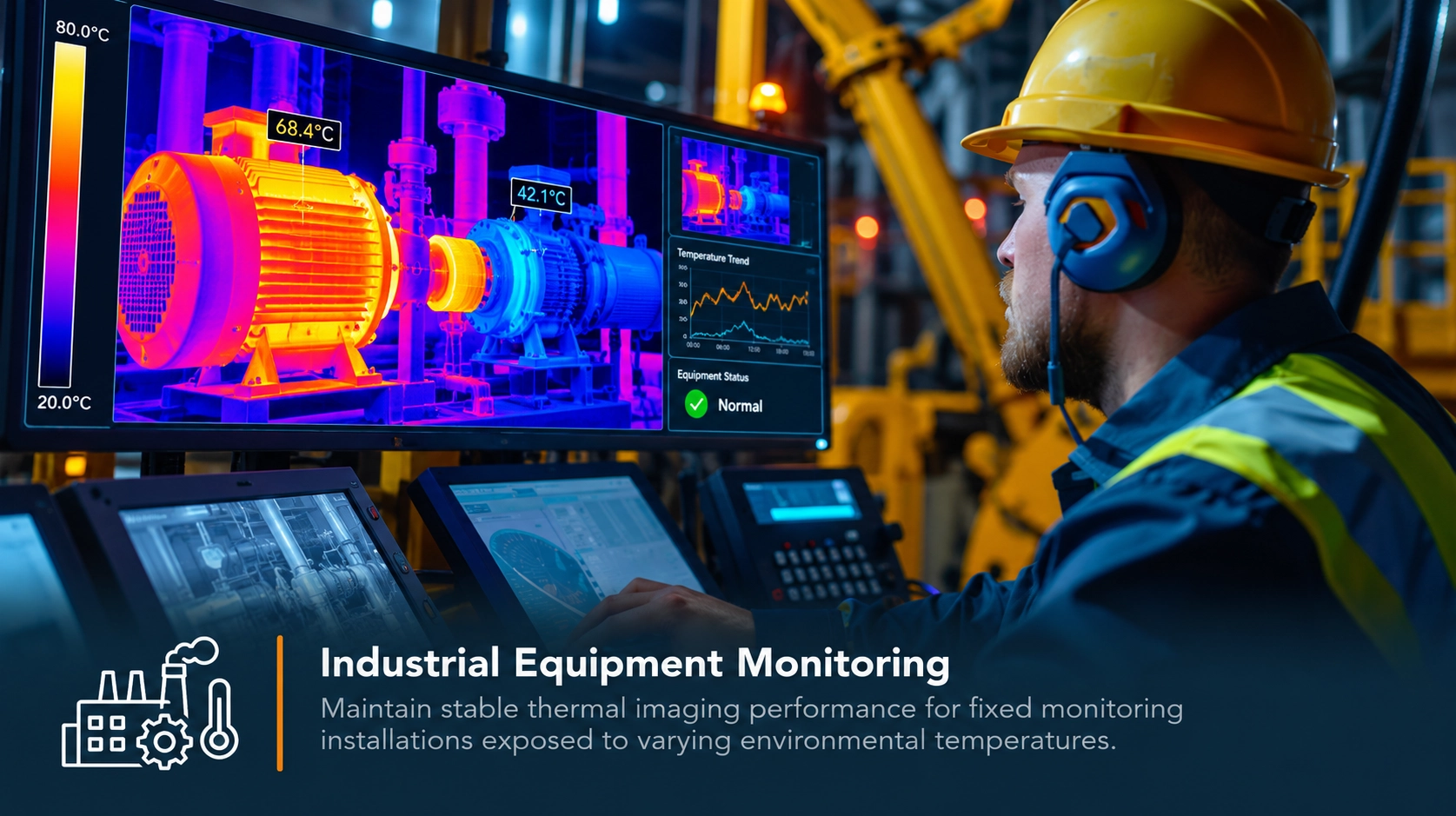
  • Industrial Equipment Monitoring: Maintain stable imaging performance in fixed thermal monitoring installations exposed to ambient temperature changes.
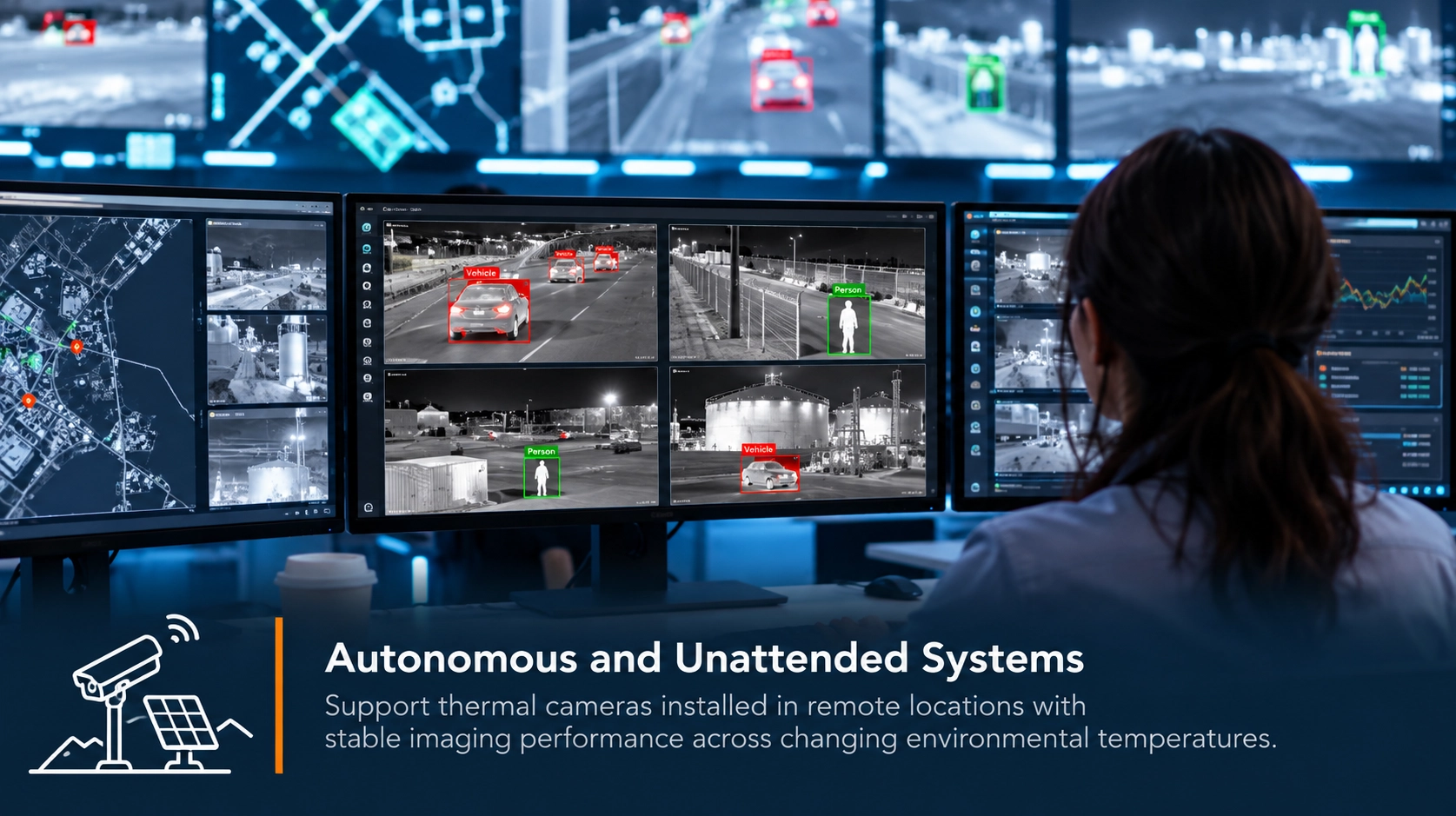
  • Autonomous and Unattended Systems: Support thermal cameras installed in remote locations where regular manual focus adjustment is impractical.
Autonomous Thermal Surveillance Control Roomwebp
Thermal Equipment Monitoring in Action
Thermal Vision in Transit Hubs
Outdoor Thermal Security Cameras

Request Quote

Need a custom LWIR lens?

Tell us your detector, focal length, and requirements — our engineering team will support your design.